
Moving Data from Odoo Local to Production Using the Database Manager
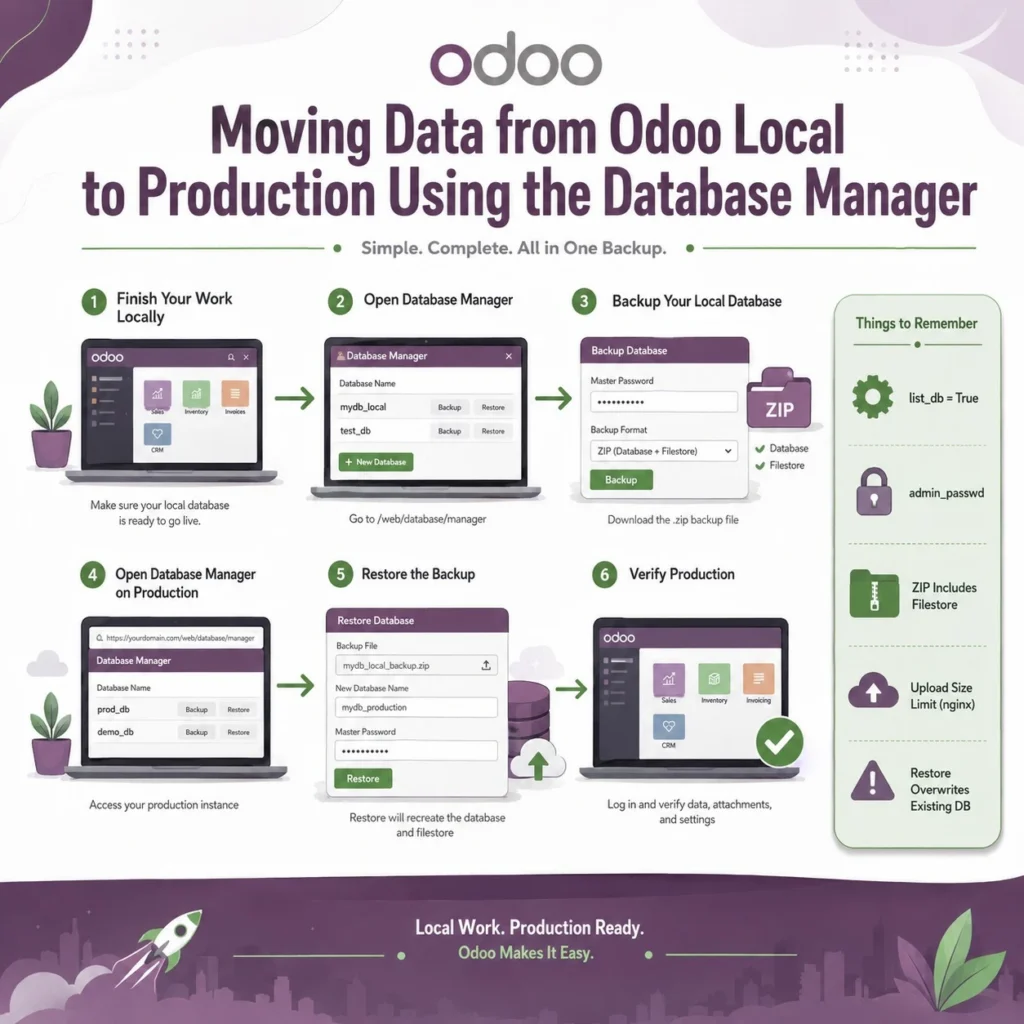
If you’ve been building and testing in Odoo on your local and now it’s time to push that work to your production server, you don’t need anything fancy, Odoo has a built-in way to do this through the Database Manager. No command line, no scripts, just export and import. In this post, I’ll walk through […]
Generating Barcodes in Odoo: A Practical Guide to Shipping Labels

If you’ve ever needed a barcode on an invoice, a product label, or a shipping label in Odoo, you don’t need a third-party library, a paid module, or a JavaScript barcode renderer. Odoo ships with a built-in barcode image generator that you can drop straight into any QWeb report. This post walks through how it […]
How to Use Odoo MCP with VS Code Copilot
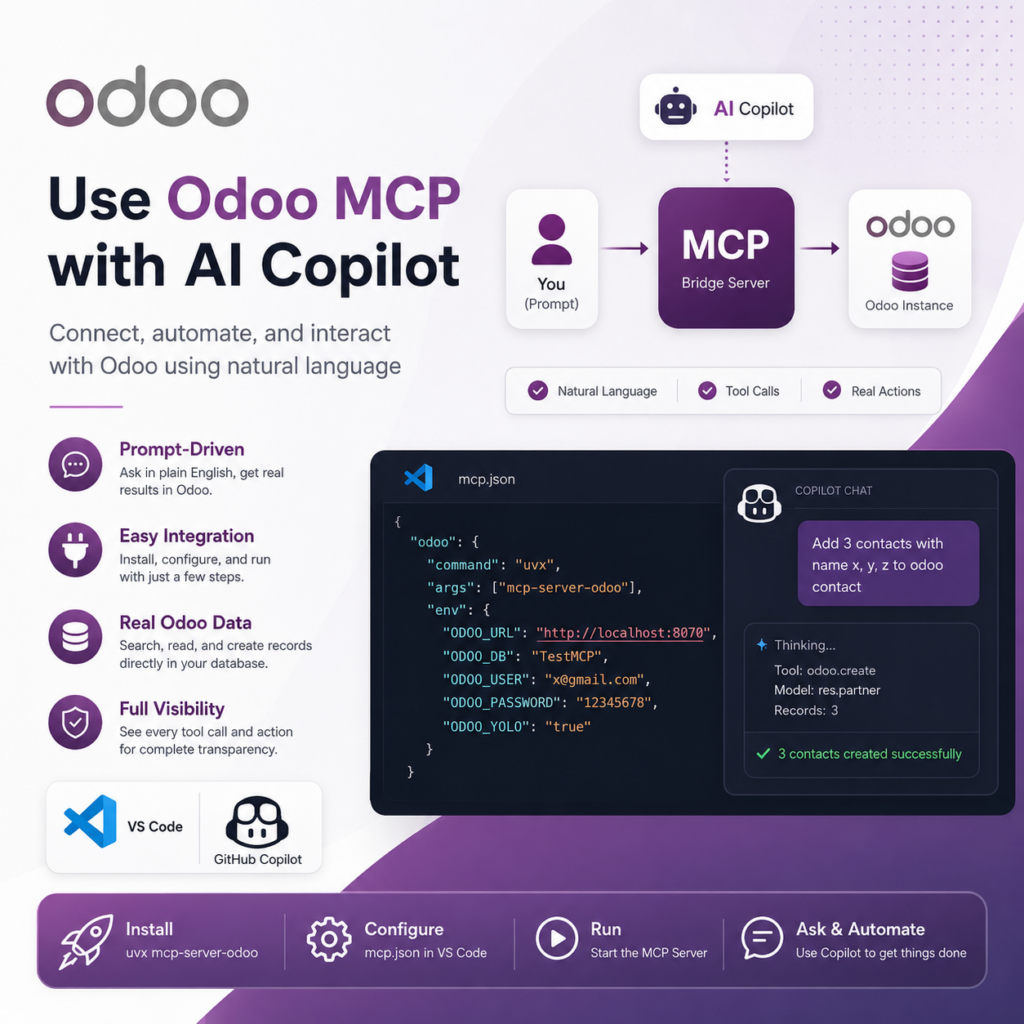
If you’ve ever wished you could just tell an AI assistant “add these three contacts to Odoo” instead of clicking through forms, that’s exactly what Odoo MCP makes possible. What Is Odoo MCP? Odoo MCP is a bridge server that exposes your Odoo instance as a set of tools an AI agent can call. Instead […]
Implementing Automatic Translation in a Custom Odoo Module
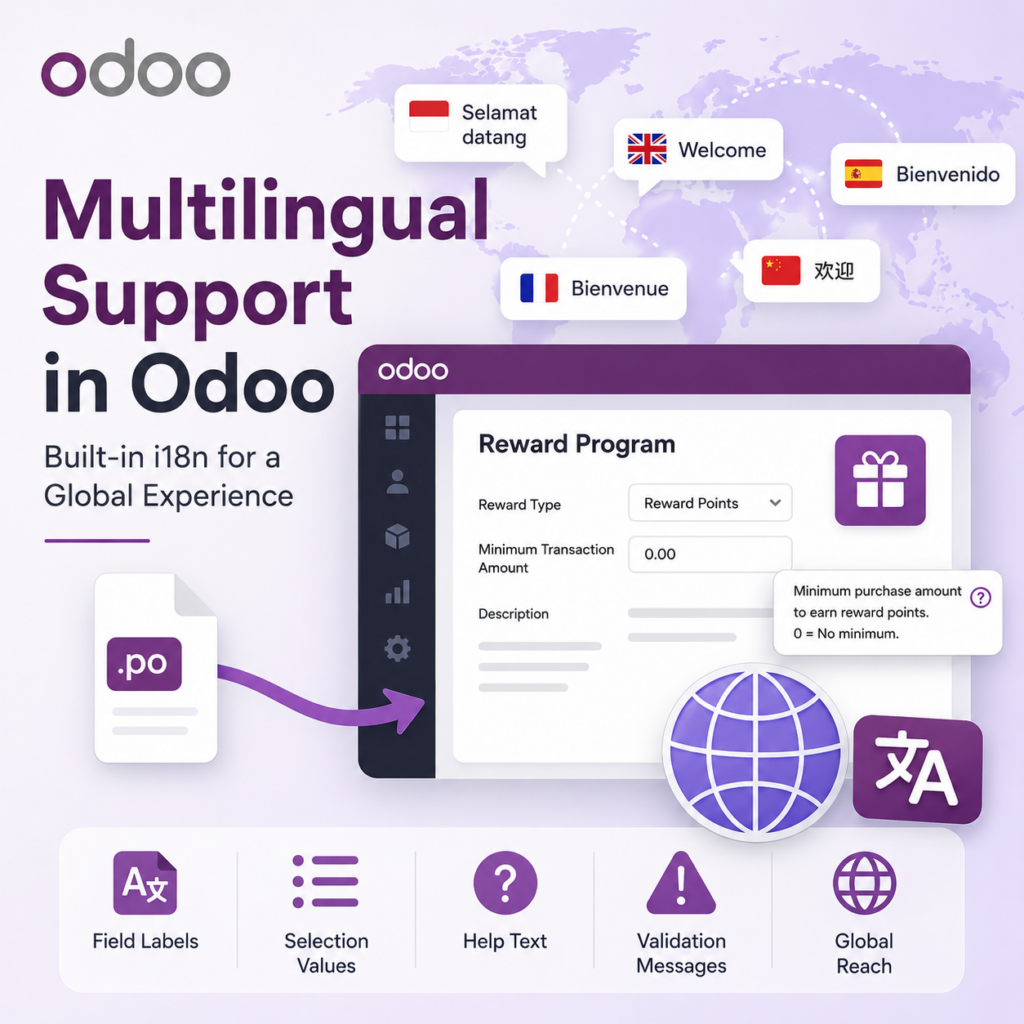
Multilingual support is a fundamental requirement for any business application serving users across different regions. Odoo addresses this with a built-in internationalization (i18n) mechanism that allows the entire interface to be translated without writing any custom translation logic. Module Structure Every Odoo module stores its translation files inside an i18n folder, using the .po (Portable […]
Using Interactions to Serve JavaScript in Odoo 19.0

Odoo 19 introduces the Interaction API as the modern way to attach JavaScript behavior to your XML templates. If you’ve previously written OWL components or used legacy publicWidget, learning Interactions will significantly simplify how you structure frontend code in custom modules. This guide explains what Interactions are, why they exist, and how to use them […]
Auto Upgrade Odoo Modules with Docker for Faster Development
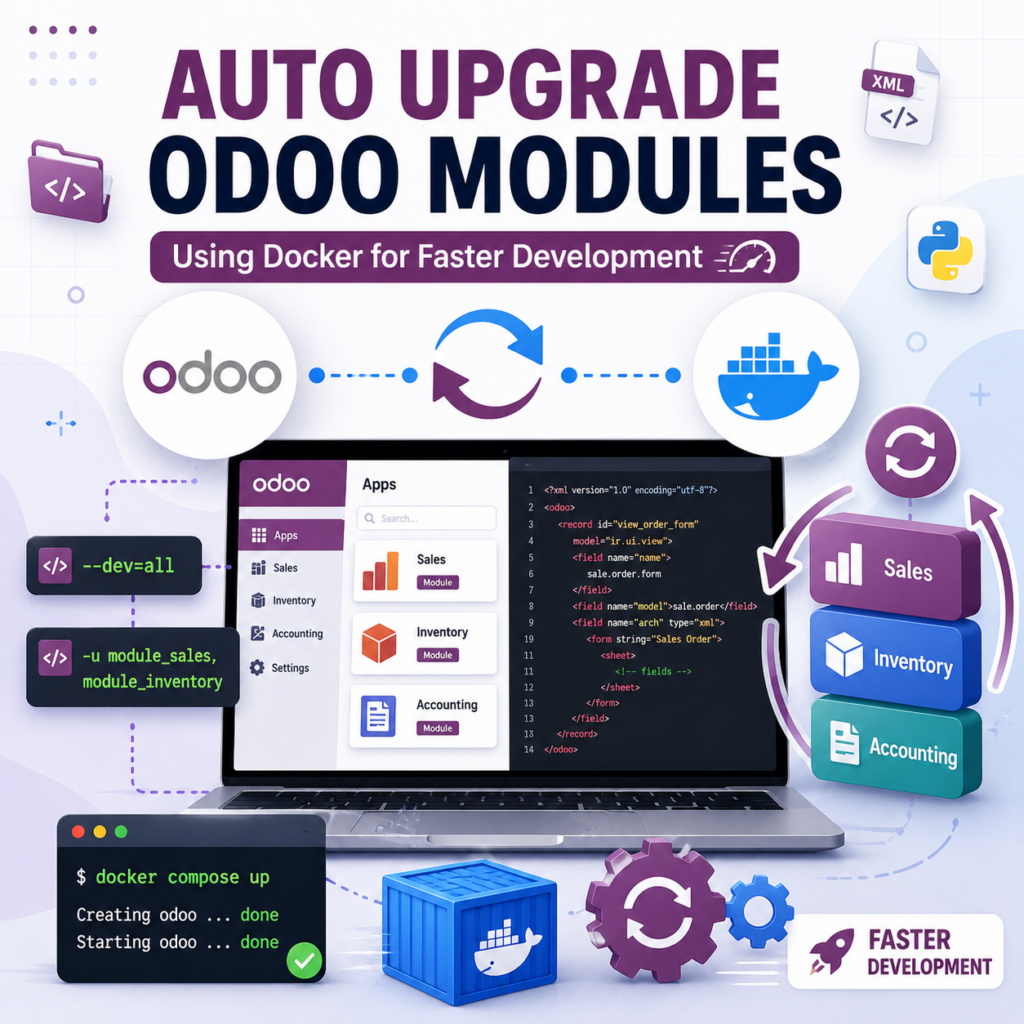
When developing custom Odoo modules, repeatedly restarting Docker containers and manually clicking Upgrade inside Odoo can significantly slow down your workflow. If your team is building custom ERP features or providing Odoo implementation services, automating module upgrades can save hours during development. This guide explains how to configure Docker so Odoo automatically reloads your code […]